Bouncing Forward: How Resilient Leaders Turn Setbacks into Stepping Stones
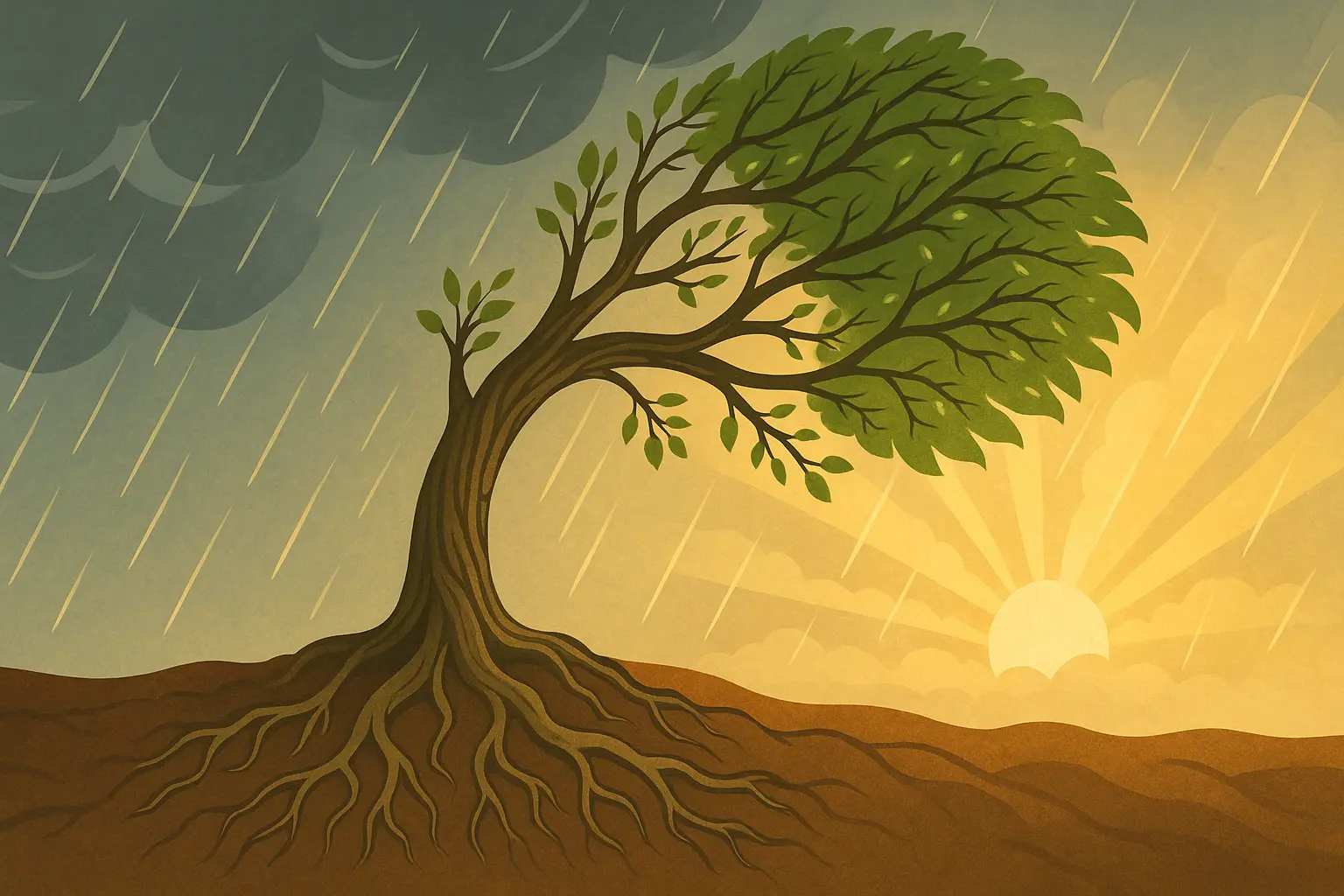
Have you ever watched a tree bend in a fierce storm, its branches swaying dramatically in the wind, and wondered how it doesn’t break? The secret isn’t in its strength alone, it’s in its ability to flex, to move with the force rather than against it, and to return to its natural state once the storm passes.
Leadership often feels like standing in that storm. Projects fail. Teams struggle. Budgets get cut. People disappoint us, and sometimes we disappoint ourselves. In my early manufacturing leadership days, I used to think resilience meant putting on a brave face and pushing through no matter what. I believed that showing any sign of being affected by setbacks would make me appear weak or unfit to lead.
What I didn’t realize then was that true resilience isn’t about pretending storms don’t affect you. It’s about learning to dance with the wind.
Redefining Resilience for Leaders
Most of us think of resilience as the ability to “bounce back” from adversity. But I’ve discovered something more powerful in my journey and in working with countless leaders: The goal isn’t just to return to where you were before the challenge hit. It’s to bounce forward, to emerge from difficulties stronger, wiser, and more capable than before.
This shift in perspective changes everything. Instead of viewing setbacks as obstacles to overcome, resilient leaders see them as information to integrate. Instead of trying to return to the way things were, they ask, “What is this experience teaching me? How can this challenge help me grow? What possibilities might emerge from this difficulty that weren’t visible before?”
As a leader, you’re likely facing your share of storms, some small, some significant. The beautiful thing is that every challenge you navigate builds your resilience muscle, preparing you not just for similar future challenges, but for the inevitable complexity of more senior leadership roles.
The Wholeness of Resilience
When we approach resilience from a whole-being perspective, we recognize that it’s not just about mental toughness or positive thinking. True resilience engages all dimensions of our being, spiritual, physical, intellectual, relational, and emotional.
Spiritual resilience connects us to our deeper purpose and values, helping us find meaning even in difficult circumstances. Physical resilience acknowledges that our bodies carry stress and that caring for our physical well-being directly impacts our ability to handle challenges. Intellectual resilience involves our capacity to learn from setbacks and adapt our thinking. Relational resilience recognizes that we don’t have to face difficulties alone. Emotional resilience includes our ability to feel our feelings fully while not being overwhelmed by them.
This holistic approach means that building resilience isn’t just about developing mental strategies, it’s about strengthening your entire system.
The Anatomy of a Resilient Response
Let me consider the story of Jennifer, a junior marketing director I coached who faced what felt like a career-ending mistake. She’d launched a campaign that, despite months of planning and multiple approvals, contained a significant error that went viral on social media, for all the wrong reasons.
Jennifer’s initial response was what many of us would do: panic, followed by shame, followed by an elaborate plan to fix everything and prove it would never happen again. But as we worked together, she learned to approach the situation with a different kind of resilience.
First, she allowed herself to feel the full weight of the disappointment and embarrassment without trying to immediately “fix” her emotions. Then, she looked at the situation with curiosity rather than judgment: What had contributed to this outcome? What systems or processes needed to be strengthened? What could she learn that would benefit not just her, but her entire team?
Most importantly, she had honest conversations with her supervisor and team about what happened, what she was learning, and how she planned to apply those lessons going forward. Instead of trying to minimize the mistake or defend her actions, she owned it fully while demonstrating her capacity to grow from it.
The result? Not only did Jennifer keep her job, but she was promoted six months later. Her supervisor later told me, “What impressed me wasn’t that Jennifer never made mistakes. It was how she handled them when they happened. That’s the kind of leader I want on my team.”
The Four Pillars of Leadership Resilience
As you develop your own resilience as a leader, consider these four essential foundations:
Emotional Agility: This isn’t about suppressing difficult emotions or forcing positivity. It’s about developing the ability to experience your emotions fully while choosing your response thoughtfully. When that project gets canceled or that team member quits unexpectedly, can you sit with the frustration or disappointment long enough to understand what it’s telling you before reacting?
Adaptive Thinking: Resilient leaders develop the capacity to hold multiple perspectives simultaneously. They can see both the immediate challenge and the bigger picture, both the problem and potential opportunities hidden within it. This doesn’t mean being naively optimistic, it means being realistically hopeful.
Connection and Support: No leader is resilient in isolation. Building and maintaining genuine relationships, with mentors, peers, team members, and even family and friends, creates a network of support that can help you weather any storm. This includes being willing to ask for help and being generous in offering support to others.
Meaning-Making: Perhaps most importantly, resilient leaders develop the ability to find purpose in their challenges. They ask not just “How do I get through this?” but “How does this experience serve my growth and my ability to serve others?”
Building Your Resilience Practice
Resilience isn’t something you either have or don’t have, it’s a capacity you can develop through intentional practice. Here are some practical ways to strengthen your resilience muscle:
Develop Your Stress Awareness: Learn to recognize the early signs of stress in your body, emotions, and thinking patterns. The earlier you can identify when you’re being stretched, the more tools you can bring to bear before you hit overwhelm.
Create Recovery Rituals: Just as athletes build recovery into their training schedules, resilient leaders build restoration into their routines. This might be a morning meditation practice, an evening walk, or simply five minutes of deep breathing between meetings.
Practice Perspective Taking: When facing a challenge, ask yourself: “How will I view this situation in six months? What would I tell a friend facing this same challenge? What would someone I admire do in this situation?” These questions can help you step back from immediate emotional reactions and access your broader wisdom.
Build Your Learning Mindset: Instead of asking “Why is this happening to me?” try asking “What is this teaching me?” This simple shift moves you from victim mode to learner mode, which is where resilience lives.
Celebrate Small Wins: Resilience is built through accumulated evidence that you can handle challenges. Make note of times you’ve navigated difficulties successfully, even small ones. These become deposits in your confidence bank that you can draw from during tougher times.
The Gift of Difficulty
I know it might sound strange to call challenges a “gift,” but here’s what I’ve learned: Every difficulty you navigate as a leader is preparing you for something bigger. Not in a “everything happens for a reason” way, but in a very practical sense.
The project that fails teaches you about risk management and stakeholder communication. The team conflict that emerges shows you the importance of clear expectations and honest feedback. The budget cut that forces creativity demonstrates that constraints can actually fuel innovation.
These aren’t just learning experiences, they’re building blocks of leadership capability. Each challenge you face with resilience rather than avoidance increases your capacity to handle greater complexity and responsibility.
Leading Others Through Storms
One of the most important aspects of developing resilience as a leader is learning to help others navigate their own challenges. When your team faces setbacks, your response sets the tone for how they’ll approach future difficulties.
This doesn’t mean being relentlessly positive or minimizing real problems. It means modeling emotional honesty while demonstrating confidence in the team’s ability to work through challenges together. It means being transparent about your own learning process while providing steady leadership.
Your team is watching how you handle pressure, how you respond to unexpected changes, and how you treat people when times are tough. Your resilience becomes their permission to be resilient too.
The Compound Effect of Resilient Leadership
Here’s something beautiful about developing resilience: It compounds over time. Each challenge you navigate with grace and learning adds to your capacity for handling future challenges. Each time you choose growth over defensiveness, you strengthen your ability to see opportunities within obstacles.
But the ripple effects go beyond your own development. Resilient leaders create resilient teams. They foster environments where people feel safe to take calculated risks, where mistakes are treated as learning opportunities, and where challenges are approached collaboratively rather than with blame and fear.
This kind of leadership culture doesn’t just survive change, it drives innovation and creates competitive advantage.
Your Resilience Journey Starts Now
You don’t have to wait for a major crisis to begin building your resilience. In fact, the best time to develop these capabilities is during relatively calm periods, so they’re available to you when you need them most.
Start by paying attention to how you currently respond to smaller stresses and challenges. Do you catastrophize? Do you shut down? Do you immediately look for someone to blame? There’s no judgment here, just awareness.
Then begin experimenting with small shifts. The next time something doesn’t go according to plan, pause and take three deep breaths before responding. Ask yourself one curious question about the situation. Reach out to one person for perspective or support.
Remember, resilience isn’t about being invulnerable. It’s about being honestly human while choosing how you want to respond to life’s inevitable challenges. It’s about understanding that setbacks are not evidence that you’re not cut out for leadership, they’re opportunities to practice the very skills that will make you an exceptional leader.
The storms will come. That’s not a pessimistic statement, it’s simply reality. But with resilience as your foundation, you’ll not only weather those storms, you’ll learn to find wisdom in the wind and strength in the swaying.
Your journey of building resilience begins here. What challenge might actually be your next opportunity for growth?
Ready to transform your relationship with adversity and build the resilience that will fuel your leadership journey? I’d love to help you develop the inner strength and outer skills that turn setbacks into comebacks. Let’s talk and explore how challenges can become your greatest teachers.